History & Provenance
History of Precious Metals in Architectural Finishes
From gilded leaf to engineered coatings
July 12, 2026
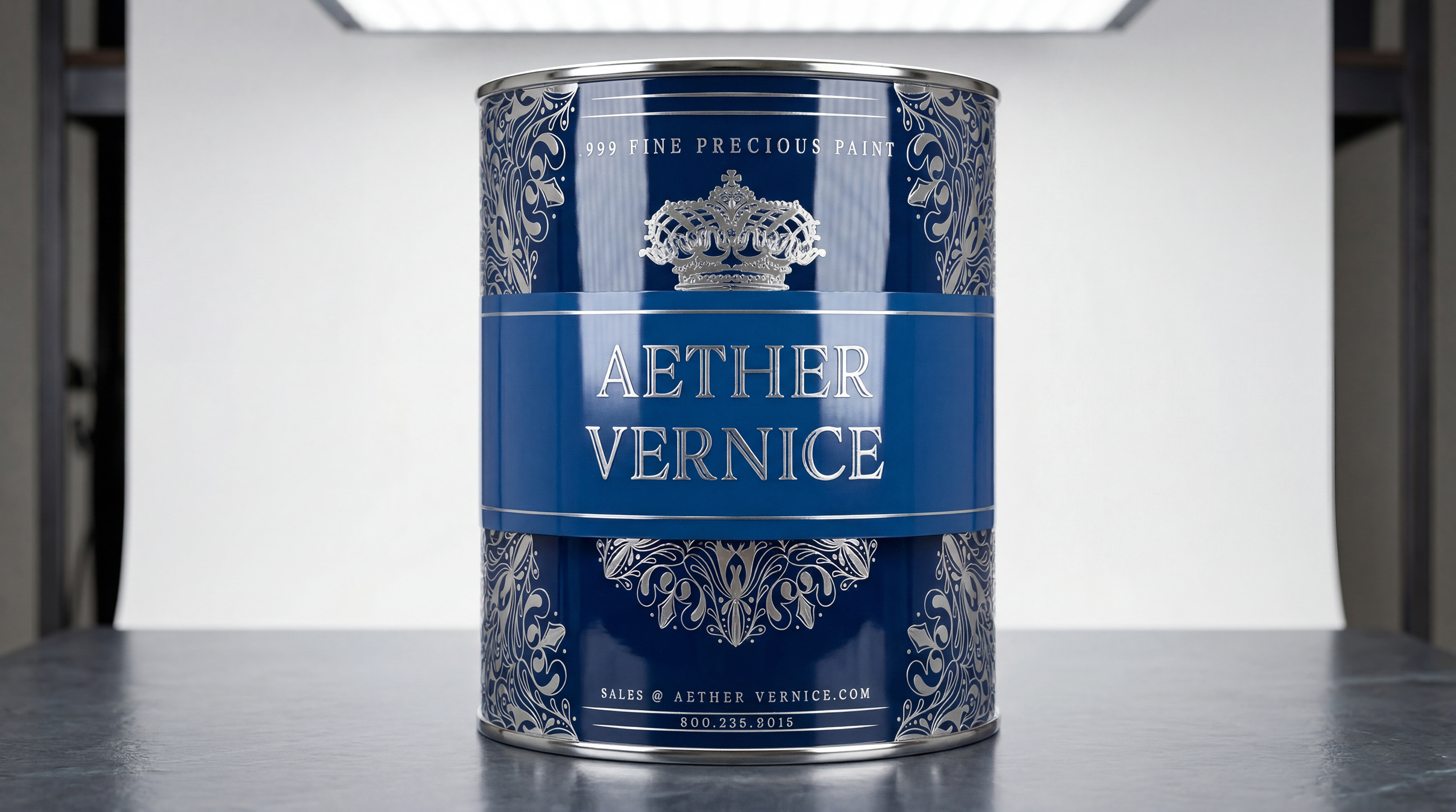
For millennia, gold and silver have been used not as mere decoration, but as functional optical materials. This is a history of their use in architecture, from the hammered leaf of ancient artisans to today's engineered coatings.
The enduring dialogue between architecture and light is written in the language of metal. For millennia, gold, silver, and their noble counterparts have been employed not as mere decoration, but as functional optical materials, shaping how structures command space and perceive the day. The passage from the artisan’s hammered leaf to the scientist’s engineered coating is a history of craft, chemistry, and an evolving comprehension of materiality itself. It is a progression from applying a surface to designing a system—a history that finds its contemporary apogee in the micron-refined metal coatings of the modern atelier.
The Ancient Radiance: Gilding as Symbol and Surface
Divine Light and Imperial Power
The earliest integrations of precious metals into architecture were material acts of theology. In ancient Egypt, the capstones of great pyramids and obelisks, the pyramidions, were sheathed in electrum, a naturally occurring alloy of gold and silver. Positioned at the apex, these gilded points were the first to catch the dawn and the last to hold the dusk, serving as worldly conduits for the divine light of the sun god, Ra. The material choice was inseparable from its meaning: gold, which does not tarnish nor decay, mirrored the eternal nature of the gods and the enduring reign of the pharaoh.
This correlation between material incorruptibility and divine authority persisted across cultures, where its scale became a declaration of imperial dominion. Nero’s Domus Aurea, or "Golden House," was a villa complex of unprecedented audacity, its interiors notoriously rendered in gold leaf. Here, gold was not just a symbol of the divine but of absolute temporal power—the ability to command vast resources and labor to coat the built world in the most coveted of elements. In these early applications, the value of gold was intrinsic, derived from its elemental purity, solar color, and immense rarity. It was a physical stratum of wealth and divinity, applied.
The Art of the Leaf: Early Techniques and Material Constraints
The primary technology for applying gold to a surface for nearly all of history was gilding, and its foundational craft was that of the goldbeater. Through a laborious process of controlled, repetitive impact, a single troy ounce of gold could be hammered into a sheet nearly 100 square feet in area and only a few millionths of an inch thick. This impossibly thin leaf was then applied using two primary methods: water gilding and oil gilding.
Water gilding, the superior method reserved for interior work, involved applying the leaf over a meticulously prepared gesso ground and a layer of bole—a fine clay mixed with binder. The surface could then be burnished with a polished agate stone to a brilliant, mirror-like finish. Oil gilding used an oil-based adhesive, or mordant, that remained tacky for a period, allowing the leaf to be applied to less-perfect exterior or interior surfaces.
Despite the masterful skill involved, leaf gilding was fraught with technical limitations. The leaf itself is exceptionally fragile, acutely susceptible to abrasion and tearing. Its application is intensely manual and demands a flawless, stable substrate; any imperfection in the underlying surface is amplified by the optical nature of the gilded surface. This is the central property of gold leaf: [[/journal/precious-metal-paints/real-precious-metal-paint|specular reflection]]. It reflects light from a single incident angle, like a mirror. This property, while brilliant, is also optically unforgiving, producing a hard glare and telegraphing every flaw in the wall or object beneath. It was a masterful but limited technology—a brittle skin of light adhered to a surface, its performance entirely dependent on the perfection of the substrate and the stability of its environment.
The Renaissance and the Refinement of Luster
From Fresco to Façade: Expanding the Gilded Canvas
During the Renaissance and Baroque periods, the use of gold in architecture evolved from a symbolic overlay to a dynamic agent within the architectural composition. Artists and architects began to wield gold’s unique optical properties to articulate form, direct the eye, and heighten the drama of spatial experience. It was no longer enough for gold to simply be present; it was required to perform.
Gian Lorenzo Bernini’s monumental baldacchino in St. Peter's Basilica is a masterwork of this philosophy. While cast in bronze, its gilded elements—the writhing Solomonic columns, the detailed foliage, the triumphant angels—serve to capture and refract light throughout the cavernous space beneath Michelangelo's dome, creating a celestial focal point. Similarly, the golden dome of Les Invalides in Paris, designed by Jules Hardouin-Mansart, acts as a radiant beacon in the city’s skyline. Its gilded surface is not merely decorative but architectural, defining the building’s silhouette and asserting its importance through a constant, shimmering dialogue with the sun. Gold was becoming integral to the dynamic expression of form.
Bole, Burnish, and the Chromatic Manipulation of Light
Coinciding with this expanded use was a significant refinement in technique, representing an early form of optical engineering for a finish. Gilders of the era understood that the final appearance of the gold was not dictated by the leaf alone. The critical intervening element was the bole, the colored clay layer applied to the gesso immediately beneath the leaf.
This practice leveraged a clear principle of optics. The ultra-thin gold leaf is not perfectly opaque; a minuscule quantity of light passes through it, reflects off the colored bole, and travels back through the gold to the viewer's eye. By varying the color of the bole, the gilder could subtly manipulate the final perceived hue and warmth of the gold. A traditional iron-oxide red bole imparts a deep, warm luminosity, enhancing the inherent solar tone of the metal. A yellow bole produces a cooler, more lemon-hued gold, while grey or black boles create ethereal, almost silvery tones. This was a sophisticated, multi-layered system designed to modulate the chromatic and reflective character of the finish—a direct conceptual precursor to the engineered coatings of the modern era.
The Interregnum: Industrial Alloys and the Modernist Gaze
The Rise of Architectural Metals: Bronze, Steel, and Aluminum
The Industrial Revolution and the subsequent rise of Modernism occasioned a fundamental shift in the architectural material palette. The ornamental language of the past, with its reliance on applied decoration like gilding, was supplanted by a new doctrine of structural honesty and material truth. Precious metals receded as architects embraced the aesthetic potential of industrial metals integral to the building’s very fabric.
Architectural bronze, stainless steel, and later, anodized aluminum became the metals of the moment. The Seagram Building in New York, with its iconic curtain wall of extruded bronze I-beams, stands as a monument to this shift. The beauty of the material was seen to reside in its inherent structural properties and its unadorned expression. The aesthetic vocabulary prioritized clean lines, rational forms, and the honest display of function over what was seen as superfluous ornament.
A Reassessment of Materiality
Yet, the Modernist rejection of ornament was not a rejection of quality or of metal’s atmospheric potential. It was, rather, a demand for materiality to be more deeply integrated into the design concept. The critique was aimed at materials that were merely applied—a superficial layer with no authentic relationship to the structure or space. This philosophical shift, which seemingly closed the door on precious metals in architecture, inadvertently set the stage for their re-emergence. It established a new criterion: for a material to be worthy, it could not simply be a decorative finish. It had to be a high-performance system, integral to the architectural vision.
The Alchemical Shift: The Birth of the Metallic Coating
From Powder to Pigment: The Challenge of Suspension and Stability
The first attempts to create a "gold paint" by translating the appearance of leaf into a liquid-applied coating were met with a cascade of scientific failures. The intuitive approach—simply grinding gold into a powder and mixing it with a binder—was fundamentally flawed. The challenges were both chemical and physical.
Chemically, grinding a metal dramatically increases its surface-area-to-volume ratio, making the particles highly reactive and susceptible to oxidation. Common metals like bronze would tarnish rapidly, their color shifting and dulling. Physically, dense metal particles exhibit a strong tendency to fall out of suspension in a low-viscosity liquid, settling into a hard, unusable cake. Furthermore, fine particles tend to agglomerate due to intermolecular forces, resulting in a gritty, uneven finish that lacks cohesive luminosity. It became clear that creating a stable, luminous metallic coating required not a simple pulverization, but a reinvention of the pigment itself.
The Role of the Binder: Early Formulations and Their Limitations
The other half of the early coating equation, the binder or vehicle, presented its own set of limitations. Traditional binders like linseed oil, a cornerstone of oil paint, were unsuited for high-performance metallic coatings. Unsaturated fatty acids in the oil oxidize in the presence of light and air, a process that causes the binder to yellow and become brittle. This chemical shift distorted the color of the metallic pigment and led to cracking and delamination.
Early synthetic polymers, developed in the mid-20th century, offered an improvement but were not a complete solution. Many initial formulations exhibited poor UV stability and would break down under sunlight, leading to a loss of clarity, chalking of the surface, and catastrophic coating failure. Adhesion to diverse architectural substrates was also inconsistent. These failures underscored a critical realization: the performance of a metallic finish depends as much on the chemistry of its binder as on the quality of its pigment. The two are inseparable components of a single system.
The Aether Vernice Paradigm: Micron-Refined Metals in Advanced Polymer Systems
The Science of the Micron-Refined Particle
The contemporary solution to the historical challenges of metallic finishes lies in a paradigm shift in manufacturing. At Aether Vernice, precious metals are not beaten or coarsely ground. Instead, they are subjected to a proprietary process to be processed and micron-refined into precisely engineered particles. These are not granular specks but are specifically shaped to be lamellar, or plate-like, with a highly controlled particle-size distribution.
This specific geometry is essential to their optical performance. When applied, these microscopic platelets align parallel to the substrate, forming a dense, overlapping stratum of metal. This arrangement maximizes total luminous reflectance. Unlike the hard, specular reflection of gold leaf, the micron-refined particles create a softer, more complex luster. Light is reflected from millions of individual platelets at infinitesimally different angles, producing a deep, diffuse glow that appears to emanate from within the finish itself. This effect, known in coatings science as "flop," causes the color and luminosity to shift subtly with the viewing angle, creating a dynamic surface that traditional gilding cannot achieve.
Engineering the Matrix: The Symbiosis of Pigment and Polymer
The modern binder is no longer a passive vehicle but an active, integral component of the coating system. We refer to it as the matrix: an advanced, optically clear polymer resin, typically of an acrylic or polyurethane chemistry. These resins are engineered for properties unattainable with earlier binders.
Their primary function is protection. The polymer matrix completely encapsulates each metal particle, creating an inert, impermeable barrier that isolates the metal from oxygen, atmospheric moisture, and pollutants such as sulfur compounds. This encapsulation is the key to preventing oxidation and ensuring long-term color stability. Optically, the polymer is formulated for maximum clarity and a refractive index that works in concert with the metal particles to enhance luminosity. Physically, it provides the exceptional adhesion, flexibility, and abrasion resistance required for a durable architectural finish that can withstand environmental exposure and cleaning. The result is a unified system where the pigment provides the elemental color and the matrix ensures its permanence.
Beyond Gold: The Spectral Possibilities of Platinum, Palladium, and Silver
This synthesis of pigment and matrix unlocks the architectural potential of precious metals beyond gold. Silver, while possessing the highest reflectivity of any metal, is notoriously reactive and prone to rapid tarnishing through sulfidation. Platinum and its sister metals are exceptionally inert but are extremely dense and difficult to work into traditional forms.
By having these metals processed and micron-refined and encapsulating them within a protective polymer matrix, their inherent instabilities are rendered moot; they become perfectly stable architectural pigments. This innovation opens an entirely new chromatic palette for designers. Micron-refined silver yields a brilliant, cool white of unmatched luminosity. Platinum and palladium create a range of deep, sophisticated greys and silvers with unique spectral characteristics. For the first time, the full spectrum of precious metals is available as a stable, durable, light-manipulating finish, enabling a new language of architectural expression written in pure, elemental color.
FAQ
How do micron-refined coatings differ visually from traditional gold leaf?
The visual difference is one of reflection and depth. Gold leaf, as a solid, contiguous sheet of metal, produces a hard, specular (mirror-like) reflection. This brilliant shine is directional and unforgivingly highlights any imperfection in the underlying substrate. Micron-refined coatings consist of millions of individual metallic platelets suspended within a clear polymer matrix. This structure scatters light more diffusely, creating a deep, seemingly inherent luster that is less dependent on substrate perfection. The finish exhibits a dynamic quality known as "flop," where the perceived color and brightness shift with the viewing angle and movement of light, resulting in a softer, more complex, and engaging visual experience.
What is the role of the polymer binder beyond simply holding the metal?
The polymer binder, or matrix, is an active component of the optical and protective system. Its role is threefold. Chemically, it serves as an impermeable barrier, encapsulating each metal particle to protect it from oxygen, moisture, and environmental pollutants, thus preventing oxidation and tarnish. Optically, its high clarity and engineered refractive index work in concert with the metal platelets to maximize light transmission and enhance luminosity. Physically, the polymer provides the critical properties of adhesion, flexibility, and abrasion resistance, transforming what would be a delicate decorative layer into a robust, high-performance architectural surface.
Are precious metal coatings more durable than traditional paints?
Yes, fundamentally so. The durability of a coating is limited by its weakest component. In traditional paints, organic pigments are susceptible to fading from photochemical degradation caused by UV radiation. The pigment in a precious metal coating is the elemental metal itself—an inorganic material that cannot fade or change color from UV exposure. When this permanent pigment is protected within a high-performance, UV-stable polymer matrix that resists environmental degradation, the resulting finish exhibits a functional lifespan and chromatic fidelity that far exceeds conventional architectural paints.
Why process and micron-refine metals instead of using pre-made metallic powders?
Commercial metallic powders are commodity materials produced for a wide range of industrial applications. They lack the stringent controls on purity, particle-size uniformity, and particle geometry essential for a luxury architectural finish. Our proprietary process to process and micron-refine metals allows for absolute control over these critical variables. By engineering the particles to have a specific lamellar (plate-like) geometry and a narrow size distribution, we maximize luminous reflectance and ensure consistent color and performance. This precision engineering is what distinguishes a true precious-metal coating system from a simple "metallic paint."